

Is IELTS Required for Germany Student Visa?
January 17, 2026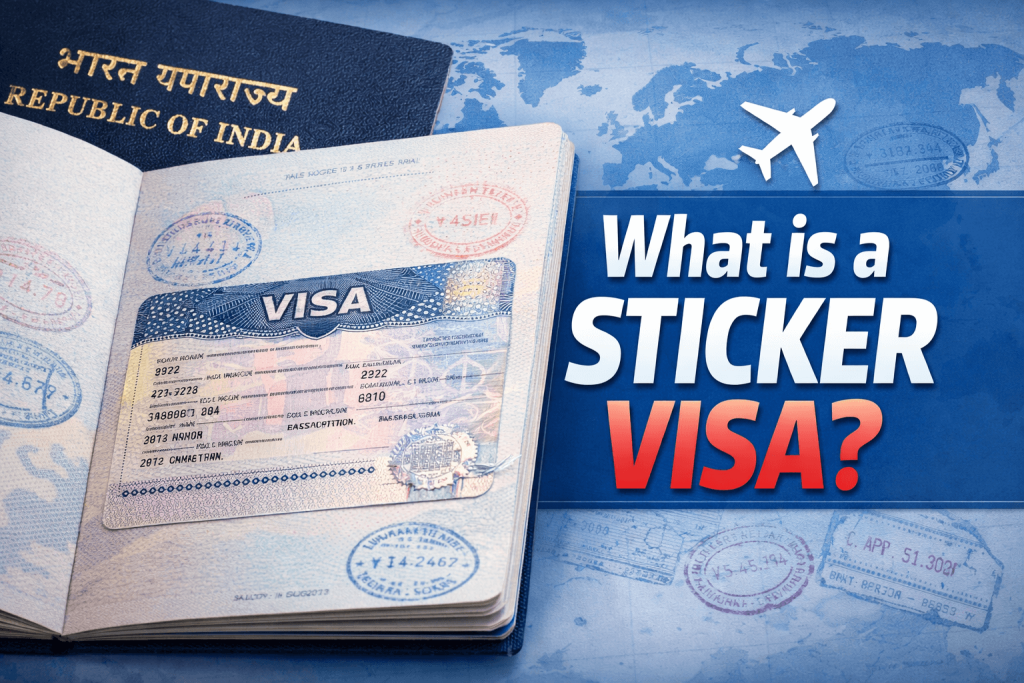
What is a Sticker Visa?
Just Image you open your passport and find a big sticker stamped on one of the pages of your visa. For most of the people in India, this is what visa looks like. But this old- school version of visa is called sticker visa. Though visas are already replaced by E-visas but sill a lot of countries including India use these types of visas.
Definition of Sticker Visa?
A sticker visa is the old-school kind—an actual sticker or label that an embassy or consulate puts right into your passport. You’ll see your name, passport number, visa type, how long it’s valid, how many times you can enter, plus the official seal. To get one, you usually hand over your real passport, bring whatever paperwork they ask for, and sometimes show up for an interview or give fingerprints. Once you’re approved, they print the visa and stick it in your passport. Immigration officers can just flip to that page and see you’re good to go. People still use sticker visas a lot, especially for longer stays like studying, working, or living abroad. Even though digital visas are getting more common, sticker visas haven’t disappeared—they’re still used and accepted in plenty of countries.
How Does a Sticker Visa Work?
To get a Sticker visa you have to follow few steps. First you need to handover your passport to the embassy or in the nearest visa center.
Make Sure to Bring the proper documentation such as photos, Application form, funds proof, etc, Tese are sometimes required for interview.
After that, you wait. When your visa’s approved, they print it out and stick it right into your passport. Then you get your passport back.
When you arrive at the border, immigration officers just flip through your passport and check the sticker visa themselves. That’s it—if everything looks good, you’re through.
Which Countries Still Issue Sticker Visas?
Many countries continue to use sticker visas, especially for long-term or sensitive visa categories. These include:
- Student visas
- Work visas
- Residence permits
- Some visitor visas
Countries such as the USA, Canada, the UK (for certain categories), and Schengen countries still issue sticker visas for specific visa types, even though they also offer electronic or biometric systems.
What Type of Visa Used in India?
In India, the visa system mainly operates through electronic visas (e-Visas), but sticker visas are still used for certain categories. For short-term travel such as tourism, business, medical, and conference visits, India issues e-Visas that are applied for online and linked electronically to the traveller’s passport, removing the need to submit the original passport. However, for long-term and specialised purposes like student visas, employment visas, research visas, missionary visas, and diplomatic visas, India continues to issue sticker visas. These require applicants to submit their passport to the relevant embassy or visa application centre, where the visa is physically affixed inside the passport after approval. Many applicants seeking long-term international travel guidance, including those consulting a Germany Visa consultant in Jalandhar, often encounter sticker visas when applying for study or work-related visas, as these categories typically require detailed verification and physical visa endorsement.
Conclusion
In conclusion, while digital visa systems are becoming more common, sticker visas continue to play an important role, especially for long-term travel, study, and employment purposes. Many countries still rely on physical visa labels for detailed verification and security, making it essential for applicants to understand which visa format applies to their travel plans. With constantly changing visa regulations and documentation requirements, professional guidance can make the process smoother and more reliable. Consulting an experienced Schengen Visa consultant Jalandhar can help applicants avoid errors, ensure proper documentation, and improve their chances of a successful visa outcome.